老師先介紹了big data的定義、來源、應用、技術,然後簡單的定義大數據就是「接上之後會一直有資料跑進來」。而為什麼大數據的概念現在很火紅,因為近年來行動科技的發展,許多手機都有裝置「information-sensing mobile device」,這些裝置可以測得很多使用者的資料,這些看似沒有用的資料如果進行一定程度的分析跟掏選之後,可能可以得到值得信賴的資料。但是和傳統不同的是,大數據的資料分析不是靠因果關係,而是靠「相關性」,所得到的結果只能了解在數據上面有變化,卻不能呈現問題的成因。但是這樣的內容還是很有價值,舉例來說:Google透過「流感」相關的關鍵字搜尋可以測得發生流感的地區跟規模,用來預測疾病的發生。「流感的關鍵字」其實跟「有沒有得流感」沒有直接的關係,但是透過這種猜測和預測,這樣的結果就會很有前瞻價值。
Aristotle's Poetics (Greek: Περὶ ποιητικῆς, c. 335 BCE[1]) is the earliest surviving work of dramatic theory and the first extant philosophical treatise to focus on literary theory.[2] In it, Aristotle offers an account of what he calls "poetry" (a term which in Greek literally means "making" and in this context includes drama—comedy, tragedy, and the satyr play—as well as lyric poetry, epic poetry, and the dithyramb-A song sung to praise Dionysus, the God of wine and fertility). They are similar in the fact that they are all imitations but different in the three ways that Aristotle describes. 1. They differ in the music rhythm, harmony, meter and melody. 2. The difference of goodness in the characters. 3. The way the characters are presented in which they stay in the role that they are describing as a narrative or acting as if they are doing the things that the characters are doing.
He examines its "first principles" Aristotle says there are two causes for the origin of poetry. 1. Is imitation because we learn imitation and helps with learning. 2. To have an easier time of seeing truths. and identifies its genres and basic elements. His analysis of tragedy constitutes the core of the discussion.[3] Although Aristotle's Poetics is universally acknowledged in the Western critical tradition, Marvin Carlson explains, "almost every detail about his seminal work has aroused divergent opinions."[4]
The work was lost to the Western world and often misrepresented for a long time. It was available through the Middle Ages and early Renaissance only through a Latin translation of an Arabic version written by Averroes.[5]
Final Paper:
What you choose
What this piece of work become your choice?
Hypothesis :第一句話
Vocabulary:
Hyperbole 誇飾語法
Hypodermic
Characterization: Characterization or characterisation is the concept of creating characters for a narrative.[1] It is a literary element and may be employed in dramatic works of art or everyday conversation. Characters may be presented by means of description, through their actions, speech, or thoughts.
Shakespeare uses comic relief by adding in comic scenes after particularly tense or 'full on' scenes. he uses it for numerous reasons
to break the tension and to prevent his audience for becoming too bored and over whelmed with serious content
to give his main characters a chance to have a break from particularly intense acting scenes (the majority of comic relief scenes are played by less important characters
to make his plays more accessible to the lower class, the people who would have stood in the stalls to watch his plays would have been the uneducated lower class, the comic scenes reiterate the main messages within his plays but in an easier to follow and more fun way.
Cupid Eros God of love
Cupid Eros and psyche
-ant stands for the people suffix, e.g., flight attendant, accountant, Protestant, applicant
莎士比亞四大悲劇
Hamlet
Othello, O.J. Simpson
Macbeth
King Lear
garment with many color
Joseph, Potiphar's wife
約瑟夫的神奇彩衣:音樂劇
《約瑟的神奇綵衣》(Joseph and the Amazing Technicolor Dreamcoat)是安德魯·洛伊·韋伯和提姆·萊斯(Tim Rice)於1967年推出的第一部音樂劇。該劇是洛伊韋伯的處女作,1968年起在倫敦上演,當時他僅僅20歲。正是這部戲開始了洛伊韋伯的音樂劇傳奇。約瑟的故事完全取材於《舊約聖經》的《創世紀》所描述,有關猶太民族的祖先約瑟的故事。故事講述約瑟特別受父親寵愛,因此招至他的11個兄長嫉妒,在他出外牧羊的一天,被賣給人口販子,並輾轉去到埃及。與此同時,他的兄長對父親謊稱約瑟意外死了。後來約瑟因為被人陷害而下了監牢,卻意外使他有機會為法老解夢,使埃及渡過長達七年的饑荒。最後在父親兄弟家 鄉糧食不繼前來埃及買糧之時重聚。
劇中一首《無路可走》(Close Every Door to Me)生動地刻畫了約瑟被陷害後的心情,十分感人。劇中另一首《夢想成真》(Any Dream Will Do)也是膾炙人口、廣為傳唱的曲目。該劇佈景豪華,歌舞場面目不暇接,音樂元素十分豐富,是一部老少咸宜的劇目。
Theseus
Twelve labors
A Midsummer Night's Dream
A Midsummer Night's Dream is a comedy play by William Shakespeare, believed to have been written between 1590 and 1596. It portrays the events surrounding the marriage of the Duke of Athens, Theseus, and Hippolyta. These include the adventures of four young Athenian lovers and a group of six amateur actors (mechanicals), who are controlled and manipulated by the fairies who inhabit the forest in which most of the play is set. The play is one of Shakespeare's most popular works for the stage and is widely performed across the world.
Poem: stop all the clocks, cut off the telephone p. 775
W. H. Auden
Stop all the clocks, cut off the telephone,
Prevent the dog from barking with a juicy bone,
Silence the pianos and with muffled drum
Bring out the coffin, let the mourners come.
Let aeroplanes circle moaning overhead
Scribbling on the sky the message He Is Dead,
Put crepe bows round the white necks of the public doves,
Let the traffic policemen wear black cotton gloves.
He was my North, my South, my East and West,
My working week and my Sunday rest,
My noon, my midnight, my talk, my song;
I thought that love would last for ever: I was wrong.
The stars are not wanted now: put out every one;
Pack up the moon and dismantle the sun;
Pour away the ocean and sweep up the wood.
For nothing now can ever come to any good.
Walter "Walt" Whitman (/ˈwɪtmən/; May 31, 1819 – March 26, 1892) was an American poet, essayist and journalist. A humanist, he was a part of the transition between transcendentalism and realism, incorporating both views in his works. Whitman is among the most influential poets in the American canon, often called the father of free verse.[1] His work was very controversial in its time, particularly his poetry collection Leaves of Grass, which was described as obscene for its overt sexuality.
Born in Huntington on Long Island, Whitman worked as a journalist, a teacher, a government clerk, and—in addition to publishing his poetry—was a volunteer nurse during the American Civil War. Early in his career, he also produced a temperance novel, Franklin Evans (1842). Whitman's major work, Leaves of Grass, was first published in 1855 with his own money. The work was an attempt at reaching out to the common person with an American epic. He continued expanding and revising it until his death in 1892. After a stroke towards the end of his life, he moved to Camden, New Jersey, where his health further declined. He died at age 72 and his funeral became a public spectacle.[2][3]
Whitman's sexuality is often discussed alongside his poetry. Though biographers continue to debate his sexuality, he is usually described as either homosexual or bisexual in his feelings and attractions. However, there is disagreement among biographers as to whether Whitman had actual sexual experiences with men.[4]
Whitman was concerned with politics throughout his life. He supported the Wilmot Proviso and opposed the extension of slavery generally. His poetry presented an egalitarian view of the races, though his attitude in life reflected many of the racial prejudices common to nineteenth-century America and his opposition to slavery was not necessarily based on belief in the equality of races per se.[5] At one point he called for the abolition of slavery, but later he saw the abolitionist movement as a threat to democracy.[6]
treatise: a written work dealing formally and systematically with a subject 專著
obscene literature 淫穢文學
Ob/obs-
oblivion
oblivious
obscure
obstacle
district attorney 地方檢察官
Transdantolism
The father of free verse
Transcebdentilsm
Carpe diem-- seize the day 春風化雨系列電影
Far-reach comparison 在僵化的體制群找聲音
Dead poets society (movie)
Mona Lisa smile (movie)
The freedom writers diary (movie)
Mr. Holland's opus
To sir, with love
Sir
Madame
Full professor
Associate professor
Assistant professor
Lecturer
student lounge
O captain my captain (poem)
forefathers
YouTube: Carpe Diem dead poets society
Gather ye rosebuds while ye may by Robert Herrick
predecessor successor successive succession
prime time 黃金八點檔
17 centery Metaohysical poetry
John Donne: no man is an island
E. M. Foster's a passage to India 印度之旅
Walt Whiteman: passage to India
A valediction: forbidding mourning by John Donne
If they be two, they are two so 25
As stiff twin compasses are two ;
Thy soul, the fix'd foot, makes no show
To move, but doth, if th' other do.
And though it in the centre sit,
Yet, when the other far doth roam, 30
It leans, and hearkens after it,
And grows erect, as that comes home.
Metaohysical conceit
* Far-reach comparison
739
Though we cannot make our sun stand still,
Yet we cab make him run.
740
Dover beach
* A short lyric poem
* Dover bitch and Dover beach
Edgar Allan Poe: The Raven
* The philosophy of composition
* Metaphor
* Snake
* Puberty
* Semiotics
Danae and the golden shower
Rapenzel
Phallic symbol
Narrative poetry is a form of poetry that tells a story, often making use of the voices of a narrator and characters as well; the entire story is usually written in metred verse. The poems that make up this genre may be short or long, and the story it relates to may be complex. It is usually dramatic, with objectives, diverse characters, and metre.[1] Narrative poems include epics, ballads, idylls, and lays.
Some narrative poetry takes the form of a novel in verse. An example of this is The Ring and the Book by Robert Browning. In terms of narrative poetry, a romance is a narrative poem that tells a story of chivalry. Examples include the Romance of the Rose or Tennyson's Idylls of the King. Although these examples use medieval and Arthurian materials, romances may also tell stories from classical mythology.
Shorter narrative poems are often similar in style to the short story. Sometimes these short narratives are collected into interrelated groups, as with Chaucer's Canterbury Tales. Some literatures contain prose narratives that include poems and poetic interludes; much Old Irish poetry is contained within prose narratives, and the Old Norse sagas include both incidental poetry and the biographies of poets. An example is "The Cremation of Sam McGee" by Robert Service.
Whenever Richard Cory went down town,
We people on the pavement looked at him:
He was a gentleman from sole to crown,
Clean favored, and imperially slim.
And he was always quietly arrayed,
And he was always human when he talked;
But still he fluttered pulses when he said,
'Good-morning,' and he glittered when he walked.
And he was rich - yes, richer than a king -
And admirably schooled in every grace:
In fine, we thought that he was everything
To make us wish that we were in his place.
So on we worked, and waited for the light,
And went without the meat, and cursed the bread;
And Richard Cory, one calm summer night,
Went home and put a bullet through his head. 每個人都有自己的壓力
Edwin Arlington Robinson
Duo Quixote 唐吉柯德
Don Quixote (/ˌdɒn kiːˈhoʊtiː/; Spanish: [ˈdoŋ kiˈxote] ( listen)), fully titled The Ingenious Gentleman Don Quixote of La Mancha (Spanish: El ingenioso hidalgo don Quijote de la Mancha), is a Spanish novel by Miguel de Cervantes Saavedra. It follows the adventures of Alonso Quixano, an hidalgo who reads so many chivalric novels 騎士that he decides to set out to revive chivalry, under the name Don Quixote. He recruits a simple farmer, Sancho Panza, as his squire, who often employs a unique, earthly wit in dealing with Don Quixote's rhetorical orations on antiquated knighthood. Don Quixote is met by the world as it is, initiating such themes as intertextuality, realism, metatheatre, and literary representation.
Frodo 理性的隨仲,感性的主人
Youtube: to dream the impossible dream from the quest
To dream the impossible dream
To fight the unbeatable foe
To bear with unbearable sorrow
To run where the brave dare not go
To right the unrightable wrong
To love pure and chaste from afar
To try when your arms are too weary
To reach the unreachable star
This is my quest
To follow that star
No matter how hopeless
No matter how far
To fight for the right
Without question or pause
To be willing to march into Hell
For a heavenly cause
And I know if I'll only be true
To this glorious quest
That my heart will lie peaceful and calm
When I'm laid to my rest
And the world will be better for this
That one man, scorned and covered with scars
Still strove with his last ounce of courage
To reach the unreachable star
anti romance: An anti-romance, sometimes referred to as a satire, is a type of story characterized by having an apathetic or self-doubting anti-hero cast as the protagonist, who fails in the object of his journey or struggle. Most anti-romances take place in urban settings, and frequently feature insanity, depression, and the meaning of reality as major themes. An anti-romance is the antithesis of a romance.
ballad: a verse narrative that is, or originally was, meant to be sung. Characterized by repetition and often by a refrain (a recurrent phrase or series of phrases), ballads were originally a folk creation, transmitted orally from person to person and age to age. An example is "Sir Patrick Spens."
sir Patrick spens
"Sir Patrick Spens" is one of the most popular of the Child Ballads (No. 58), and is of Scottish origin.[1]
synecdoche 部分舉于法
a figure of speech in which a part is made to represent the whole or vice versa, as in England lost by six wickets (meaning ‘ the English cricket team’).
La belle da me sans Merci, the beautiful woman without mercy
The Preface to the Lyrical Ballads is an essay, composed by William Wordsworth, for the second edition (published in January 1801, and often referred to as the "1800 Edition") of the poetry collection Lyrical Ballads, and then greatly expanded in the third edition of 1802.
O what can ail thee, knight-at-arms,
Alone and palely loitering?
The sedge has withered from the lake,
And no birds sing.
O what can ail thee, knight-at-arms,
So haggard and so woe-begone?
The squirrel’s granary is full,
And the harvest’s done.
I see a lily on thy brow,
With anguish moist and fever-dew,
And on thy cheeks a fading rose
Fast withereth too.
I met a lady in the meads,
Full beautiful—a faery’s child,
Her hair was long, her foot was light,
And her eyes were wild.
I made a garland for her head,
And bracelets too, and fragrant zone;
She looked at me as she did love,
And made sweet moan
I set her on my pacing steed,
And nothing else saw all day long,
For sidelong would she bend, and sing
A faery’s song.
She found me roots of relish sweet,
And honey wild, and manna-dew, What is this, 天賜神糧
And sure in language strange she said—
‘I love thee true’.
She took me to her Elfin grot,
And there she wept and sighed full sore,
And there I shut her wild wild eyes
With kisses four.
And there she lullèd me asleep,
And there I dreamed—Ah! woe betide!—
The latest dream I ever dreamt
On the cold hill side.
I saw pale kings and princes too,
Pale warriors, death-pale were they all;
They cried—‘La Belle Dame sans Merci
Hath thee in thrall!’
I saw their starved lips in the gloam,
With horrid warning gapèd wide,
And I awoke and found me here,
On the cold hill’s side.
And this is why I sojourn here,
Alone and palely loitering,
Though the sedge is withered from the lake,
And no birds sing.
http://en.wikipedia.org/wiki/File:Arthur_Hugues_-_La_belle_dame_sans_merci.jpg
Ernest Hemmingway by the sun also rises
See wiki selected works
No man is an island, John Donne
No man is an island,
Entire of itself,
Every man is a piece of the continent,
A part of the main.
If a clod be washed away by the sea,
Europe is the less.
As well as if a promontory were.
As well as if a manor of thy friend's
Or of thine own were:
Any man's death diminishes me,
Because I am involved in mankind,
And therefore never send to know for whom the bell tolls;
It tolls for thee.
P883, 1081
Lame balloonman deslysus
Somewhere I have never traveled, gladly beyond
She blossomed for him, "the Great Gesby"
梁靜茹 崇拜
That time of year thou mayst in me behold
When yellow leaves, or none, or few, do hang
Upon those boughs which shake against the cold,
Bare ruin’d choirs, where late the sweet birds sang.
In me thou see’st the twilight of such day
As after sunset fadeth in the west,
Which by and by black night doth take away,
Death’s second self, that seals up all in rest.
In me thou see’st the glowing of such fire
That on the ashes of his youth doth lie,
As the death-bed whereon it must expire,
Consum’d with that which it was nourish’d by
This thou perceiv’st, which makes thy love more strong,
To love that well which thou must leave ere long.
Sonnet 73 (William Shakespeare, 1564-1616)
Lyric: 677
Ode
Elegy
Metaphor: compare
1099
Willian Faulkner speech
I refuse to accept this. I believe that man will not merely endure: he will prevail. He is immortal, not because he alone among creatures has an inexhaustible voice, but because he has a soul, a spirit capable of compassion and sacrifice and endurance. The poet's, the writer's, duty is to write about these things. It is his privilege to help man endure by lifting his heart, by reminding him of the courage and honor and hope and pride and compassion and pity and sacrifice which have been the glory of his past. The poet's voice need not merely be the record of man, it can be one of the props, the pillars to help him endure and prevail.
Four pillars of the society
To Helen
BY EDGAR ALLAN POE
Helen, thy beauty is to me
Like those Nicéan barks of yore,
That gently, o'er a perfumed sea,
The weary, way-worn wanderer bore
To his own native shore.
On desperate seas long wont to roam,
Thy hyacinth hair, thy classic face,
Thy Naiad airs have brought me home
To the glory that was Greece,
And the grandeur that was Rome.
Lo! in yon brilliant window-niche
How statue-like I see thee stand,
The agate lamp within thy hand!
Ah, Psyche, from the regions which
Are Holy-Land!
重現希臘羅馬的榮光
曾經有過的榮光
677
elegy
since the Renaissance, usually a formal lament on the death of a particular person, but focusing mainly on the speaker’s efforts to come to terms with his or her grief;
more broadly, any lyric in sorrowful mood that takes death as its primary subject. An example is W. H. Auden’s "In Memory of W. B. Yeats."
878
embed poem
add to anthology
poets.org
options
fullscreen
Do not go gentle into that good night
Dylan Thomas, 1914 - 1953
Do not go gentle into that good night,
Old age should burn and rave at close of day;
Rage, rage against the dying of the light.
Though wise men at their end know dark is right,
Because their words had forked no lightning they
Do not go gentle into that good night.
Good men, the last wave by, crying how bright
Their frail deeds might have danced in a green bay,
Rage, rage against the dying of the light.
Wild men who caught and sang the sun in flight,
And learn, too late, they grieved it on its way,
Do not go gentle into that good night.
Grave men, near death, who see with blinding sight
Blind eyes could blaze like meteors and be gay,
Rage, rage against the dying of the light.
And you, my father, there on the sad height,
Curse, bless, me now with your fierce tears, I pray.
Do not go gentle into that good night.
Rage, rage against the dying of the light.
When I was one-and-twenty
Free verse
free versepoetry characterized by varying line lengths, lack of traditional meter, and nonrhyming lines.
Oxymoron 矛盾修飾語法:
"Go gentle"
Because I could not stop for Death – (479)
BY EMILY DICKINSON
Because I could not stop for Death –
He kindly stopped for me –
The Carriage held but just Ourselves –
And Immortality.
We slowly drove – He knew no haste
And I had put away
My labor and my leisure too,
For His Civility –
We passed the School, where Children strove
At Recess – in the Ring –
We passed the Fields of Gazing Grain –
We passed the Setting Sun –
Or rather – He passed Us –
The Dews drew quivering and Chill –
For only Gossamer, my Gown –
My Tippet – only Tulle –
We paused before a House that seemed
A Swelling of the Ground –
The Roof was scarcely visible –
The Cornice – in the Ground –
Since then – 'tis Centuries – and yet
Feels shorter than the Day
I first surmised the Horses' Heads
Were toward Eternity –
Oedipus (Sphinx's riddle)
Stopping by Woods on a Snowy Evening
BY ROBERT FROST
Whose woods these are I think I know.
His house is in the village though;
He will not see me stopping here
To watch his woods fill up with snow.
My little horse must think it queer
To stop without a farmhouse near
Between the woods and frozen lake
The darkest evening of the year.
He gives his harness bells a shake
To ask if there is some mistake.
The only other sound’s the sweep
Of easy wind and downy flake.
The woods are lovely, dark and deep,
But I have promises to keep,
And miles to go before I sleep,
And miles to go before I sleep.
Source: Collected Poems, Prose, & Plays (Library of America, 1995)
775 quiz
The blind side
The Blind Side (2009)
Quotes
Showing all 26 items
Michael Oher: Courage is a hard thing to figure. You can have courage based on a dumb idea or mistake, but you're not supposed to question adults, or your coach or your teacher, because they make the rules. Maybe they know best, but maybe they don't. It all depends on who you are, where you come from. Didn't at least one of the six hundred guys think about giving up, and joining with the other side? I mean, valley of death that's pretty salty stuff. That's why courage it's tricky. Should you always do what others tell you to do? Sometimes you might not even know why you're doing something. I mean any fool can have courage. But honor, that's the real reason for you either do something or you don't. It's who you are and maybe who you want to be. If you die trying for something important, then you have both honor and courage, and that's pretty good. I think that's what the writer was saying, that you should hope for courage and try for honor. And maybe even pray that the people telling you what to do have some, too.
21 of 23 found this interesting | Share this
YouTube: the end of the world
http://m.youtube.com/watch?v=Qgcy-V6YIuI
P. 777
O Captain! My Captain!
BY WALT WHITMAN
O Captain! my Captain! our fearful trip is done,
The ship has weather’d every rack, the prize we sought is won,
The port is near, the bells I hear, the people all exulting,
While follow eyes the steady keel, the vessel grim and daring;
But O heart! heart! heart!
O the bleeding drops of red,
Where on the deck my Captain lies,
Fallen cold and dead.
O Captain! my Captain! rise up and hear the bells;
Rise up—for you the flag is flung—for you the bugle trills,
For you bouquets and ribbon’d wreaths—for you the shores a-crowding,
For you they call, the swaying mass, their eager faces turning;
Here Captain! dear father!
The arm beneath your head!
It is some dream that on the deck,
You’ve fallen cold and dead.
My Captain does not answer, his lips are pale and still,
My father does not feel my arm, he has no pulse nor will,
The ship is anchor’d safe and sound, its voyage closed and done,
From fearful trip the victor ship comes in with object won;
Exult O shores, and ring O bells!
But I with mournful tread,
Walk the deck my Captain lies,
Fallen cold and dead.
What is poetry?
poetryone of the three major genres of imaginative literature, which has its origins in music and oral performance and is characterized by controlled patterns of rhythm and syntax (often using meter and rhyme); compression and compactness and an allowance for ambiguity; a particularly concentrated emphasis on the sensual, especially visual and aural, qualities and effects of words and word order; and especially vivid, often figurative language.
Oxymoron 矛盾修飾法
- wise fool
- parting is such sweet sorrow, Romeo and Juliet
Love and lost, dream and adventures, life and death
Didactic: teaching something
Percy Shelley
Beauty is truth, truth is beauty. John Keats
End rhyme
Rhyme scheme
Shall I compared thee to a summer's day
American national anthem
USA National Anthem Lyrics - US National AnthemUnited States of America
The Star Spangled Banner
Oh, say! can you see by the dawn's early light
What so proudly we hailed at the twilight's last gleaming;
Whose broad stripes and bright stars, through the perilous fight,
O'er the ramparts we watched were so gallantly streaming?
And the rocket's red glare, the bombs bursting in air,
Gave proof through the night that our flag was still there:
Oh, say! does that star-spangled banner yet wave
O'er the land of the free and the home of the brave?
On the shore, dimly seen through the mists of the deep,
Where the foe's haughty host in dread silence reposes,
What is that which the breeze, o'er the towering steep,
As it fitfully blows, half conceals, half discloses?
Now it catches the gleam of the morning's first beam,
In fully glory reflected now shines in the stream:
'Tis the star-spangled banner! Oh, long may it wave
O'er the land of the free and the home of the brave!
And where is that band who so vauntingly swore
That the havoc of war and the battle's confusion
A home and a country should leave us no more?
Their blood has washed out their foul footsteps' pollution!
No refuge could save the hireling and slave
From the terror of flight or the gloom of the grave:
And the star-spangled banner in triumph doth wave
O'er the land of the free and the home of the brave.
Oh, thus be it ever, when freemen shall stand
Between their loved home and the war's desolation!
Blest with victory and peace, may the heav'n-rescued land
Praise the Power that hath made and preserved us a nation!
Then conquer we must, when our cause it is just,
And this be our motto: "In God is our trust":
And the star-spangled banner in triumph shall wave
O'er the land of the free and the home of the brave.
God Save the Queen
Lyrics
God save our gracious Queen,
Long live our noble Queen,
God save the Queen:
Send her victorious,
Happy and glorious,
Long to reign over us:
God save the Queen.
O Lord, our God, arise,
Scatter her enemies,
And make them fall.
Confound their politics,
Frustrate their knavish tricks,
On thee our hopes we fix:
God save the Queen.
Thy choicest gifts in store,
On her be pleased to pour;
Long may she reign:
May she defend our laws,
And ever give us cause
To sing with heart and voice
God save the Queen
From every latent foe,
From the assassins blow,
God save the Queen!
O'er her thine arm extend,
For Britain's sake defend,
Our mother, prince, and friend,
God save the Queen!
Pentameter
Vocabulary and glossary:
foot: the basic unit of poetic meter, consisting of any of various fixed patterns of one to three stressed and unstressed syllables. A foot may contain more than one word or just one syllable of a multisyllabic word. In scansion, breaks between feet are usually indicated with a vertical line or slash mark, as in the following example (which contains five feet): "One com- | mon note | on ei- | ther lyre | did strike" (Dryden, "To the Memory of Mr. Oldham").
overstatement: the action of stating something too strongly; exaggeration 誇飾的英文
sonnet: a fixed verse form consisting of fourteen lines usually in iambic pentameter. An Italian sonnet consists of eight rhymelinked lines (an octave) plus six rhymelinked lines (a sestet), often with either an abbaabba cdecde or abbacddc defdef rhyme scheme. This type of sonnet is also called the Petrarchan sonnet in honor of the Italian poet Petrarch (1304– 74). An English or Shakespearean sonnet instead consists of three quatrains (four- line units) and a couplet and often rhymes abab cdcd efef gg.
simile: a figure of speech involving a direct, explicit comparison of one thing to another, usually using the words like or as to draw the connection, as in "My love is like a red, red rose." An analogy is an extended simile.
personification: a figure of speech that involves treating something nonhuman, such as an abstraction, as if it were a person by endowing it with humanlike qualities, as in "Death entered the room."
allegory: a literary work, whether in verse or prose, in which characters, action, and even aspects of setting signify (or serve as symbols for) a second, correlated order of concepts, persons, and actions. One of the most famous English-language allegories is John Bunyan’s Pilgrim’s Progress, in which a character named Christian has to make his way through obstacles such as the Slough of Despond to get to the Celestial City.
allusion: a brief, often implicit and indirect reference within a literary text to something outside the text, whether another text (e.g., the Bible, a myth, another literary work, a painting, or a piece of music) or any imaginary or historical person, place, or thing. Many of the footnotes in this book explain allusions found in literary selections.
ID: Author, title, significance of the cited passages
Vocabulary
tarnish v. lose or cause to lose lustre, especially as a result of exposure to air or moisture
Obs- stands for something negative
obscured (a.) not discovered or known about; uncertain
obstacle
obstinate (a.) stubbornly refusing to change one's opinion or chosen course of action, despite attempts to persuade one to do so
Keyword: O. J. Simpson
Life is but a walking shadow.
Materialize their desire.
William Cuthbert Faulkner
an American writer and Nobel Prize laureate from Oxford, Mississippi.
Faulkner wrote novels, short stories, a play, poetry, essays and screenplays.
He is primarily known for his novels and short stories set in the fictional Yoknapatawpha County, based on Lafayette County, Mississippi where he spent most of his life.
Faulkner is one of the most important writers in American literature generally and Southern literature specifically. Though his work was published as early as 1919, and largely during the 1920s and 1930s, Faulkner was relatively unknown until receiving the 1949 Nobel Prize in Literature. Two of his works, A Fable (1954) and his last novel The Reivers (1962), won the Pulitzer Prize for Fiction.[2] In 1998, the Modern Library ranked his 1929 novel The Sound and the Fury sixth on its list of the 100 best English-language novels of the 20th century; also on the list were As I Lay Dying (1930) and Light in August (1932). Absalom, Absalom! (1936) is often included on similar lists.
one of the three major genres of imaginative literature, which has its origins in music and oral performance and is characterized by controlled patterns of rhythm and syntax (often using meter and rhyme); compression and compactness and an allowance for ambiguity; a particularly concentrated emphasis on the sensual, especially visual and aural, qualities and effects of words and word order; and especially vivid, often figurative language.
Kinds of poetry
narrative poetry
lyrical poetry (lyre)
ode
a lyric poem characterized by a serious topic and formal tone but without a prescribed formal pattern. Examples include Keats’s odes and Shelley’s "Ode to the West Wind."
Percy Bysshe Shelley, 1792 - 1822
I
O wild West Wind, thou breath of Autumn’s being,
Thou, from whose unseen presence the leaves dead
Are driven, like ghosts from an enchanter fleeing,
Yellow, and black, and pale, and hectic red,
Pestilence-stricken multitudes: O thou,
Who chariotest to their dark wintry bed
The wingèd seeds, where they lie cold and low,
Each like a corpse within its grave,until
Thine azure sister of the Spring shall blow
Her clarion o’er the dreaming earth, and fill
(Driving sweet buds like flocks to feed in air)
With living hues and odours plain and hill:
Wild Spirit, which art moving everywhere;
Destroyer and Preserver; hear, O hear!
Edgar Allen Poe
The raven
a narrative poem by American
noted for its musicality, stylized language, and supernatural atmosphere
It tells of a talking raven's mysterious visit to a distraught lover, tracing the man's slow fall into madness. The lover, often identified as being a student, is lamenting the loss of his love, Lenore.
Sitting on a bust of Pallas, the raven seems to further instigate his distress with its constant repetition of the word "Nevermore".
The poem makes use of a number of folk and classical references.
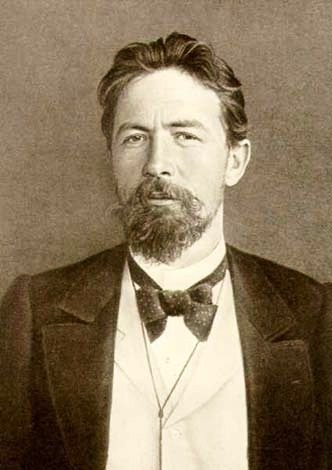
Anton Chekov
The whole world is a garden, The Cherry Orchard
Three sisters
The seagull
Yasunari Kawabata’s “The Grasshopper and the Bell Cricket”
Anton Pavlovich Chekhov (Russian: Анто́н Па́влович Че́хов, pronounced [ɐnˈton ˈpavləvʲɪt͡ɕ ˈt͡ɕexəf]; 29 January 1860 – 15 July 1904)
a Russian physician, dramaturge and author who is considered to be among the greatest writers of short stories in history.
His career as a dramatist produced four classics and his best short stories are held in high esteem by writers and critics.
Chekhov practised as a medical doctor throughout most of his literary career: "Medicine is my lawful wife", he once said, "and literature is my mistress."[6]
Three Sisters and The Cherry Orchard.
"theatre of mood"
"submerged life in the text."
His originality consists in an early use of the stream-of-consciousness technique, later adopted by James Joyce and other modernists, combined with a disavowal of the moral finality of traditional story structure.
He made no apologies for the difficulties this posed to readers, insisting that the role of an artist was to ask questions, not to answer them.
Vocabulary:
monstr [show]
democracy [-cracy, government manage] 民主
demonstration [protest]
remonstrance 抗議;建言
-cracy [government manage]
a combining form occurring in loanwords from Greek ( aristocracy; democracy ); on this model used, with the meaning “rule,” “government,” “governing body,” to form abstract nouns from stems of other origin: mobocracy; bureaucracy.
bureaucracy (n.) a system of government in which most of the important decisions are taken by state officials rather than by elected representatives 官僚政治
theocracy (n.) a system of government in which priests rule in the name of God or a god神權政治;僧侶政治
mobocracy (n.) rule or domination by the masses 暴民政治;暴民統治
bell [war]
rebel 反叛
antebellum 戰前的
belligerent 好戰的
Glossary:
setting: the time and place of the action in a work of fiction, poetry, or drama.
the spatial setting is the place or places in which action unfolds
the temporal setting is the time. (Temporal setting is thus the same as plot time.)
It is sometimes also helpful to distinguish between general setting—the general time and place in which all the action unfolds—and particular settings—the times and places in which individual episodes or scenes take place. The film version of Gone with the Wind, for example, is generally set in Civil War– era Georgia, while its opening scene takes place on the porch of Tara, Scarlett O’Hara’s family home, before the war begins.
symbol: a person, place, thing, or event that figuratively represents or stands for something else. Often the thing or idea represented is more abstract and general, and the symbol is more concrete and particular. A traditional symbol is one that recurs frequently in (and beyond) literature and is thus immediately recognizable to those who belong to a given culture. In Western literature and culture, for example, the rose and snake traditionally symbolize love and evil, respectively. Other symbols such as the scarlet letter in Nathaniel Hawthorne’s The Scarlet Letter instead accrue their complex meanings only within a particular literary work; these are sometimes called invented symbols.
figurative language: language that uses figures of speech.
figure of speech: any word or phrase that creates a "figure" in the mind of the reader by effecting an obvious change in the usual meaning or order of words, by comparing or identifying one thing with another; also called tropes. Metaphor, simile, metonymy, overstatement, oxymoron, and understatement are common figures of speech.
hypothesis: a supposition or proposed explanation made on the basis of limited evidence as a starting point for further investigation
a rite of passage making entrance or acceptance into a group or society.
Christian baptism or confirmation, graduation form school, or recruit training.
Initiation stories
Catcher in the Rye (1951)
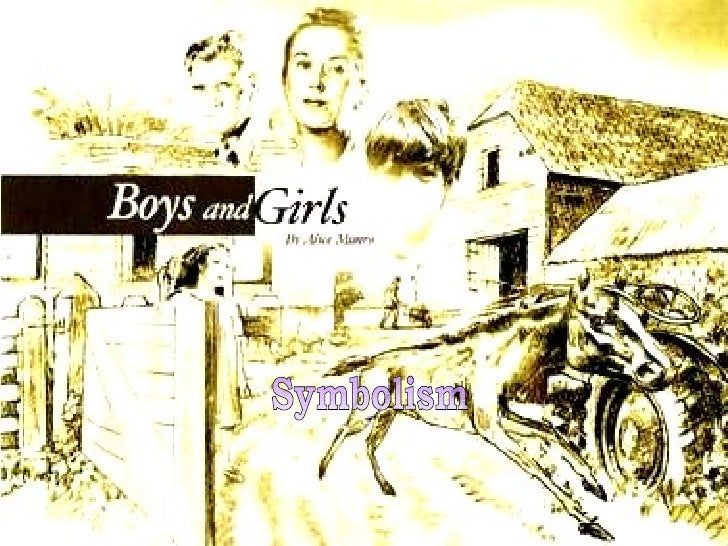
Alice Munro *(p. 137)
a Canadian author writing in English.
Munro's work has been described as having revolutionized the architecture of short stories, especially in its tendency to move forward and backward in time. Her stories embed more than announce, reveal more than parade. Munro's fiction is most often set in her native Huron County in southwestern Ontario. Her stories explore human complexities in an uncomplicated prose style. Munro's writing has established her as "one of our greatest contemporary writers of fiction," or, as Cynthia Ozick put it, "our Chekhov." Awarded the 2013 Nobel Prize in Literature for her work as "master of the contemporary short story", and the 2009 Man Booker International Prize for her lifetime body of work, she is also a three-time winner of Canada's Governor General's Award for fiction.
Song: Danny Boy
“When I am dead, as dead I well may be” 小女孩對死亡的想像
Questions: page 147
Synecdoche (提喻法): a figure of speech in which a part is made to represent the whole or vice versa, as in Cleveland won by six runs (meaning “Cleveland's baseball team”).
One stand of the rest of all.
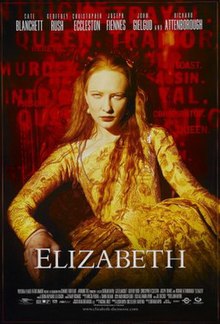
Elizabeth is a 1998 biographical film written by Michael Hirst, directed by Shekhar Kapur, and starring Cate Blanchett in the title role of Queen Elizabeth I of England, alongside Geoffrey Rush, Christopher Eccleston, Joseph Fiennes, Sir John Gielgud, Fanny Ardant and Richard Attenborough. This 1998 film is loosely based on the early years of Elizabeth's reign. In 2007, Blanchett and Rush reprised their roles in the sequel, Elizabeth: The Golden Age, covering the later part of her reign.
The film brought Australian actress Blanchett to international attention. She won several awards for her portrayal of Elizabeth, notably a BAFTA and a Golden Globe in 1998, while the film was also named the 1998 BAFTA Best British Film. Elizabeth was nominated in 7 categories in the 71st Academy Awards, including Best Picture and Best Actress, receiving the prize for Best Makeup.
The film sees a young Elizabeth elevated to the throne on the death of her half-sister Mary I, who had imprisoned her. Her reign over the divided and bankrupt realm is perceived as weak and under threat of invasion by Early Modern France or Habsburg Spain. For the future stability and security of the crown she is urged by advisor William Cecil (Attenborough) to marry, and has suitors in the Catholic Philip II of Spain and the French Henri, Duc d'Anjou. She instead embarks on an affair with the wholly unsuitable Robert Dudley (Fiennes).
Elizabeth must counter threats from within such as the powerful 4th Duke of Norfolk (Eccleston), and from the armies of Mary of Guise (Ardant) garrisoned in Scotland. She also faces plots from Rome directed by Pope Pius V (Gielgud). Assisted by her 'spymaster' Francis Walsingham (Rush), she puts down the threats both internal and external, ruthlessly executing the plotters. Elizabeth eventually ends her affair and resolves to marry nobody except England. The film ends with Elizabeth assuming the persona of the 'Virgin Queen', initiating England's Golden Age.
Vocabulary:
exposition-- the part of a play or work of fiction in which the background to the main conflict is introduced: her father, a fox farmer
unglamorous (a.) lacking glamour and excitement
terrain [ter—>land] 地面、地域、地帶、地形
memg-, mega- [large, million]
megalith 兆赫
megaron 中央大廳
penetrate (v.) succeed in forcing a way into or through (a thing) 進入、穿透
Why do authors use irony?
-->To mimic real life...or to add humor.
Four basic types of irony:
Situational
Barbara's true paternity an example-- it goes against all expectations, especially of Mrs. Ansley.
Dramatic
The author "winks" knowingly at the reader because of shared information.
Readers have information that characters do not.
Readers feel superior to characters who lack information the readers have.
Verbal: "Roman Fever"
when the speaker means something other than what is said.
Cosmic
Story's point of view and its effect on irony
Because the story depends on her perspective, we identify with Alida Slade, seeing Grace Ansley as Alida sees her. We're even complicit in our dislike of Grace. But we come to see Alida as dishonest and manipulative. At the end, we join the author in a knowing, ironic wink: it serves Alida right.
Pulp fiction 通俗小說
1994 American crime film directed by Quentin Tarantino, who also co-wrote the screenplay along with Roger Avary.
known for its eclectic dialogue, ironic mix of humor and violence, nonlinear storyline, and a host of cinematic allusions and pop culture references.
The picture's self-reflexivity, unconventional structure, and extensive use of homage and pastiche have led critics to describe it as a prime example of postmodern film.
Video: The brave escape of Edith Wharton: book tailer
Alert
Observant
Make up stories
Speak languages
Keeping up with the Joneses
"Keeping up with the Joneses" is an idiom in many parts of the English-speaking world referring to the comparison to one's neighbor as a benchmark for social caste or the accumulation of material goods. To fail to "keep up with the Joneses" is perceived as demonstrating socio-economic or cultural inferiority.
Roman fever
Representation of female relationship (perception, conception, misconception)
Edith Wharton (born Edith Newbold Jones; January 24, 1862 – August 11, 1937)
Pulitzer Prize-winning American novelist, short story writer, and designer
Wharton combined her insider's view of America's privileged classes with a brilliant, natural wit to write humorous, incisive novels and short stories of social and psychological insight.
She was well acquainted with many of her era's other literary and public figures, including Theodore Roosevelt.
Vocabulary
ferocious (a.) savagely fierce, cruel, or violent
raving (n.) wild, irrational, or incoherent talk 咆哮
literacy prose works with the sounds as well as meaning of words
college level dictionary
The Elephant in the Village of the Blind
expectation
character's different perceptions and interpretations
personal experience
clues of the title
Linda Brewer’s 20/20
Ideally, we’ll ponder what we’ve just written or read; maybe our hearts or our intellects (思維能力)will have been moved off the peg just a little from where they were before.
The sinister(邪惡的) character of Nelson in "Vitamins" worked his way into the story after Carver’s writing was interrupted by a wrong number on the phone.
"I was in my room one night when I heard something in the corridor(走廊). I looked up and saw an envelope slide under the door.”
Allegory: character, actions, and setting have two connected levels of meaning
Fable (Aesop's fable): moral, animal character,
Jesus's parable: Prodigal's son
Bewitched (2005)神仙家庭
American TV situation comedy fantasy
created by Sol Saks under executive director Harry Ackerman, and starred actress Elizabeth Montgomery, Dick York (1964–1969), Dick Sargent (1969–1972), Agnes Moorehead, and David White.
The show is about a witch who marries an ordinary mortal man and tries to lead the life of a typical suburban housewife. Bewitched enjoyed great popularity, finishing as the number two show in America during its debut season, and becoming the longest-running supernatural-themed sitcom of the 1960s–1970s. The show continues to be seen throughout the world in syndication(企業聯合組織化) and on recorded media.
No, heroics
No Heroics is a British superhero-comedy television series, which began on 18 September 2008. The show is ITV2's first original sitcom. It was nominated for Best New British TV Comedy of 2008 at the British Comedy Awards.
Critical approaches
Emphasis on the text
New criticism
Structuralism
Post structuralism
Deconstruction
Narrative theory
Emphasis on the source
Biographical criticism
Psychoanalytic criticism
Emphasis on the receiver
Reader-response criticism
Historical and ideological criticism
Marxist criticism
Feminist criticism
Gender studies and queer theory
African American and ethnic literary studies
New historicism
Cultural studies
Post colonial and studies of world literature
The all critical approach in introductory literature is to help you understand the text better.
Antihero A1
Tom Sawyer
Lock: a lock of hair
Term:
epic: a long poem that celebrates, in a continuous narrative, the achievements of mighty heroes and heroines, usually in founding a nation or developing a culture, and uses elevated language and a grand, high style. Other epic conventions include a beginning in medias res, an invocation of the muse, a journey to the underworld, battle scenes, and a scene in which the hero arms himself for battle. Examples include Beowulf and Homer’s Iliad. A mock epic is a form of satire in which epic language and conventions are used to depict characters, actions, and settings utterly unlike those in conventional epics, usually (though not always) with the purpose of ridiculing the social milieu or types of people portrayed in the poem. A famous example is Alexander Pope’s The Rape of the Lock.
sonnet: a fixed verse form consisting of fourteen lines usually in iambic pentameter(抑揚格五音步). An Italian sonnet consists of eight rhymelinked lines (an octave) plus six rhymelinked lines (a sestet), often with either an abbaabba cdecde or abbacddc defdef rhyme scheme. This type of sonnet is also called the Petrarchan sonnet in honor of the Italian poet Petrarch (1304– 74). An English or Shakespearean sonnet instead consists of three quatrains (four- line units) and a couplet and often rhymes abab cdcd efef gg.
antihero: a protagonist who is in one way or another the very opposite of a traditional hero. Instead of being courageous and determined, for instance, an antihero might be timid, hypersensitive, and indecisive to the point of paralysis. Antiheroes are especially common in modern literary works; examples might include the speaker of T. S. Eliot’s "The Love Song of J. Alfred Prufrock" or the protagonist of Franz Kafka’s The Metamorphosis.
in medians res: "in the midst of things" (Latin); refers to opening a plot in the middle of the action, and then filling in past details by means of exposition or flashback.
flashback: a plot-structuring device whereby a scene from the fictional past is inserted into the fictional present or is dramatized out of order.
foreshadowing: a hint or clue about what will happen at a later moment in the plot.
Chapel(小禮拜堂), church(禮拜堂), Cathedral(教區總教堂)
snobbish(勢利的)
Flat character: A flat character is a minor character in a work of fiction who does not undergo substantial change or growth in the course of a story. Also referred to as "two-dimensional characters" or "static characters," flat characters play a supporting role to the main character, who as a rule should be round.
Raymond Carver - "Cathedral"
Raymond Carver was born in 1938 in the small town of Clatskanie, Oregon, to an alcoholic father who worked at a sawmill and a mother who worked as a waitress. He grew up in Washington state and married Maryann Burke, his high school girlfriend, when he was just eighteen. He and Maryann had two children by the time Carver was twenty-one. After high school, Carver and his family moved to California, where he worked a variety of odd jobs. He didn’t resume his schooling until 1958, when he began taking classes at Chico State College. While there, he took writing classes with the writer John Gardner, who introduced him to the world of writing.
Carver began writing poetry and short stories while continuing to work odd jobs to support his family. In 1968 he published his first poetry collection, Near Klamath, followed not long after by Winter Insomnia (1970) and several other works in the early 1970s. He began teaching at various colleges, and in 1976 he published his first short-story collection, Will You Please Be Quiet, Please?, which has become one of his best-known works.
Although Carver earned critical acclaim for his writing, he simultaneously struggled with alcoholism. His alcoholism was so severe that he was hospitalized several times. He finally stopped drinking in 1977, after many failed attempts to quit. After a hiatus(間斷) from writing, during which time he focused on staying sober, Carver published several more short-story collections: What We Talk About When We Talk About Love (1981), Cathedral (1983), and Elephant (published posthumously in 1988). Two compilations(彙編) of Carver’s stories have also been published: Where I’m Calling From (1988) and Short Cuts: Selected Stories (1993). A film version of Short Cuts, directed by Robert Altman, came out in 1993.
Carver has a distinct writing style, a strong, minimalist approach that critics often compare to the writing of Ernest Hemingway and Anton Chekhov. Carver liked to focus on down-and-out, blue-collar, middle-class people facing bleak truths, disappointments, and small revelations in their ordinary lives, all subject matter that places him firmly in the “dirty realism” school of writing. Other dirty realism writers include Bobbie Ann Mason, Ann Beattie, and Richard Ford. Besides the style and subject matter, Carver’s short stories are known for their dialogue, which mimics realistic speech patterns, and their abrupt endings—also called zero endings—that fail to tie up the story neatly, if at all.
“Cathedral” features all of the well-known Carver characteristics and is often regarded as his best short story. Carver himself considered it one of his favorites and recognized it as an important step forward in his writing. “Cathedral” ends on a slightly more optimistic note than many of his earlier stories, and Carver believed that this story, as well as the other stories in the collection Cathedral, were “more hopeful” and more fully developed than his previous work.
As Carver wrote his later short-story collections, he divorced his wife, Maryann, and married a writer named Tess Gallagher. They were married for only a few months before Carver died from lung cancer in 1988. He was fifty.
"And then I found myself thinking what a pitiful life this woman must have led. Imagine a woman who could never see herself as she was seen in the eyes of her loved one. A woman who could go on day after day and never receive the smallest compliment from her beloved."
我記得去年我看到TedXTaipei的其中一場演講,就是劉安婷小姐的Teach for Taiwan。那時他剛回國,18分鐘跟觀眾分享了他的三個求學的故事,我記得最動人是她到非洲的教書與到「瑪麗」的經驗,她每天都努力跟瑪麗問好,希望她認真的態度可以改變、有學習動機,可惜兩個月下來改變並不大,直到最後她要走的那一天,瑪麗衝過去她身邊,用身上的衣服為她擦掉腳上的泥巴,才讓她感受到了堅持教育熱情會為孩子帶來改變。
Speedy Checklist
- Who are coming?
- Why are they coming?
- How much do they know?
- What are their basic goals?
- What are their current problems?
- What can you offer them?
- What could happen after your speech?